Shingles (herpes zoster) occurs when the varicella-zoster virus—the virus that causes chickenpox—reactivates in the body. It usually causes a painful rash on one side of the body. In some people, pain continues even after the rash has healed. This is called postherpetic neuralgia (PHN). Early treatment can help manage shingles, while vaccination can reduce the risk of developing shingles and its complications.
You cannot catch shingles itself from another person. However, the virus that causes chickenpox (varicella-zoster virus) is present in the blister fluid initially and someone who has never had chickenpox or the chickenpox vaccine may develop chickenpox, but not shingles.
To reduce the risk of spreading the virus:
Once all the blisters have crusted over, the person is no longer considered infectious.
Shingles occurs when the varicella-zoster virus, which remains inactive in the body after chickenpox, becomes active again. It travels along the affected nerve towards the skin, causing a blistering rash and pain.
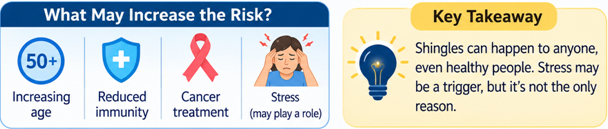
Certain factors may increase the risk:
| Factor | Why it matters |
|---|---|
| Increasing age | Immunity against the virus can weaken with age. |
| Reduced immunity | Certain illnesses and treatments can make it harder for the body to control the virus. |
| Physical or emotional stress | Stress may affect immune function and has been associated with shingles, but it cannot be identified as the cause in an individual case. |
The medicines prescribed for shingles have different purposes.
Antiviral medicines, such as aciclovir, valaciclovir or famciclovir, act against the varicella-zoster virus. They limit viral multiplication, reduce the formation of new blisters and may shorten the acute illness. They work best when started within 72 hours of the rash appearing. However, they do not directly switch off pain from nerves that have already become inflamed or irritated.
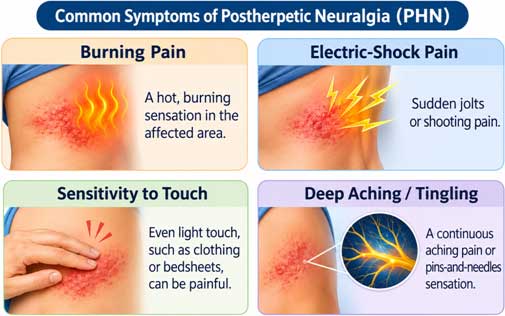
Pain-relieving medicines may be prescribed to reduce pain during the active rash. If the pain has a burning, electric shock, shooting or pinching quality, in such cases, medicines such as gabapentin, pregabalin or certain antidepressants used for nerve pain may be needed. These work by reducing excessive pain signaling from affected nerves.
Nerve-pain medicines are usually started at a low dose and gradually adjusted according to pain relief and side effects. Some patients begin to notice improvement within a few days, but it can take a few weeks to find the dose that provides a meaningful benefit. The dose may need further adjustment, and not every medicine works equally well for every patient.
So, persistent pain does not necessarily mean the treatment has failed. The pain may need a different approach depending on whether the virus is still active, the skin is healing, or the nerves remain irritated after the rash has settled.
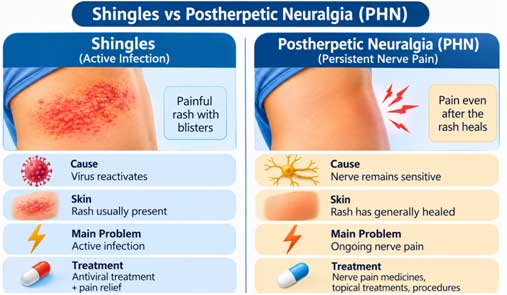
The rash may disappear, but the affected nerve can remain inflamed, damaged or over-sensitive. It may continue sending pain signals even after the skin has healed. This persistent nerve pain is called postherpetic neuralgia (PHN).
| Active shingles | Postherpetic neuralgia (PHN) |
|---|---|
| Virus has reactivated | Ongoing pain from affected nerves |
| Blistering rash is usually present | Rash has generally healed |
| Antiviral treatment may be required | Treatment focuses on nerve pain |
| Pain occurs during the active infection | Pain may continue for months or longer |
PHN is commonly defined as pain persisting more than 90-120 days after the onset of the shingles rash, although definitions vary across studies and clinical guidelines.
There is no fixed recovery time. Some people recover within weeks or months, while others may experience pain for a year or longer. Recovery depends on factors such as age, severity of the initial rash and pain, the nerves affected, and individual health.
The course can look different from one person to another:
Shingles rash and acute nerve pain
↓
Rash gradually heals
↓
Pain may gradually reduce
↓
If pain persists, PHN may develop and require targeted treatment
Persistent pain should not simply be endured, particularly if it is affecting sleep, clothing tolerance or everyday activities. Appropriate treatment can help improve comfort and function.
Most people recover from shingles, but certain symptoms may indicate complications and need prompt assessment.
People who are pregnant or have significantly weakened immunity should seek medical advice promptly if they develop shingles.
Yes. Shingrix, a recombinant zoster vaccine, is available in India and helps reduce the risk of shingles and complications such as PHN.It is a preventive vaccine,not a treatment for active shingles or existing nerve pain.
It is indicated for adults aged 50 years and above, including those who are otherwise healthy and do not have diabetes or another underlying illness. Adults with certain immunocompromising conditions may also be considered at a younger age, based on their clinical circumstances and applicable guidance.
The vaccine is given as two injections into the muscle. The second dose is usually given 2 months after the first; the interval may be extended to 6 months when needed. Having had shingles before does not remove the benefit of vaccination, but vaccination should be deferred until the acute episode has settled and the blisters have healed. The exact timing should be decided with the treating clinician. Common temporary side effects can include arm soreness, tiredness, headache and muscle aches.
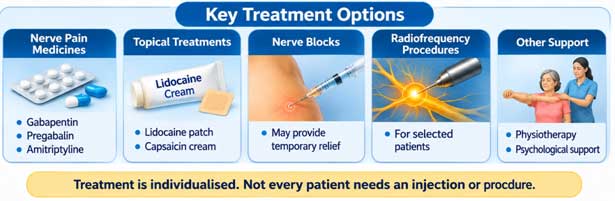
If pain continues despite appropriate medication, other treatments may be considered. The choice depends on the pain's location, distribution and severity, the sensitivity of the skin, medical history and response to previous treatment.
| Treatment | How it may help |
|---|---|
| Lidocaine patches or topical preparations | Numb the painful skin area and may reduce pain from light touch or clothing. |
| Capsaicin 8% patch | Reduces pain signaling from over-sensitive nerve endings. It is applied under clinical supervision and may cause temporary burning. |
| IV lignocaine (lidocaine) infusion | May temporarily reduce abnormal nerve-related pain signaling in selected patients. Evidence specifically for PHN is limited. |
| Ketamine infusion | Acts on pain-processing pathways in the nervous system. It may be considered in selected difficult-to-treat cases, but evidence for PHN is limited. |
Nerve blocks: A nerve block involves injecting local anaesthetic, sometimes with an anti-inflammatory medicine, near a selected nerve or nerve pathway to reduce pain signals. The target is chosen according to the area of pain—for example, an intercostal nerve for pain around the chest, a spinal nerve root or dorsal root ganglion for pain following a nerve distribution, or a cranial nerve for facial pain. A block may help identify the nerve contributing to pain and/or provide temporary relief. The duration and degree of benefit vary.
Advanced treatment options: If pain remains severe despite other treatments, selected patients may be considered for:
Rehabilitation and psychological support are also important. Gentle desensitisation can help the skin become less sensitive to touch, while graded activity helps patients gradually return to normal movement and daily routines. Addressing disturbed sleep, fear of movement and the distress associated with persistent pain can improve coping and function. Psychological support, including cognitive behavioural therapy, does not mean the pain is imaginary; it helps patients manage the impact of ongoing pain.
Not every treatment is suitable for every patient, and evidence varies between options. The aim is to select treatments with a reasonable likelihood of benefit while considering their risks and limitations. Complete pain relief cannot be guaranteed.
Some people recover completely, while others experience significant improvement over time. There is no single treatment that guarantees a cure.
Treatment aims to reduce pain, improve sleep, restore daily activities and minimise the impact on quality of life. A combination of medication, topical treatment, selected procedures and rehabilitation may be required. Treatment can be adjusted according to the response and side effects.
Ongoing pain does not mean that nothing more can be done. A pain specialist can assess the affected nerve, the pattern of pain and the treatments that may be appropriate.
There is no specific food or diet proven to cure shingles or PHN. A balanced diet supports general health and recovery.
Include a variety of:
If you have diabetes or another medical condition, follow the dietary advice for that condition. Avoid relying on restrictive diets or supplements marketed as cures. Supplements are useful when a deficiency has been identified or a clinician has recommended them.
If pain continues after the shingles rash has healed, it may be postherpetic neuralgia. Persistent nerve pain deserves proper assessment, especially when it affects sleep, clothing tolerance or everyday activities.
At International Pain Centre, New Delhi, we assess the pattern and distribution of pain and discuss appropriate medical, interventional and multidisciplinary treatment options.
This information is for patient education and does not replace an individual clinical assessment. Treatment depends on the patient's condition and medical history.